Choosing a Polyurethane Conveyor Belt Scraper: Working Requirements and Integration Fit
THE BUYER'S GUIDE / SELECTION
Choosing a Polyurethane Conveyor Belt Scraper: Working Requirements and Integration Fit
Selecting the right polyurethane conveyor belt scraper depends on matching the scraper's material properties, mechanical design, and adjustability to your conveyor system's working environment. This guide explains the key selection criteria—wear resistance, belt compatibility, adjustability, and industry-specific properties—and shows how the Polyurethane Conveyor Belt Scraper from Muto Wire Screen Co., Ltd. addresses each requirement.

Wear resistance and material integrity: The scraper blade must withstand continuous contact with a moving belt in the presence of abrasive ore, oils, or chemicals. High-strength polyurethane with excellent wear resistance, oil resistance, and elasticity is required to minimize replacement frequency and operating cost.
Belt compatibility and surface protection: The blade must clean effectively without damaging the belt carcass. For steel cord belts in particular, the blade must balance sufficient stiffness to remove carry-back with enough flexibility to follow the belt profile without causing edge damage.
Adjustability and maintenance access: The scraper must allow easy repositioning as the blade wears or belt tension changes. Pre-slotted mounting holes and an accessible adjusting mechanism reduce downtime and the risk of injury during maintenance interventions.
Industry-specific safety and compliance properties: Certain environments require food-grade polyurethane grades (food processing), fire-retardant and anti-static materials (underground mining), or high corrosion resistance (chemical and port applications). These must be specified and confirmed with the supplier.
What Is a Polyurethane Conveyor Belt Scraper?
A polyurethane conveyor belt is a critical component in bulk-material handling, and keeping its surface clean is essential to system efficiency and belt longevity. A polyurethane conveyor belt scraper is a cleaning device designed to remove impurities, residue, and adhesion from a running belt surface. According to Muto Wire Screen Co., Ltd.'s confirmed product documentation, the scraper is widely used across quarries, mines, ports, chemical plants, and other industrial environments where carry-back material causes downtime and wear.
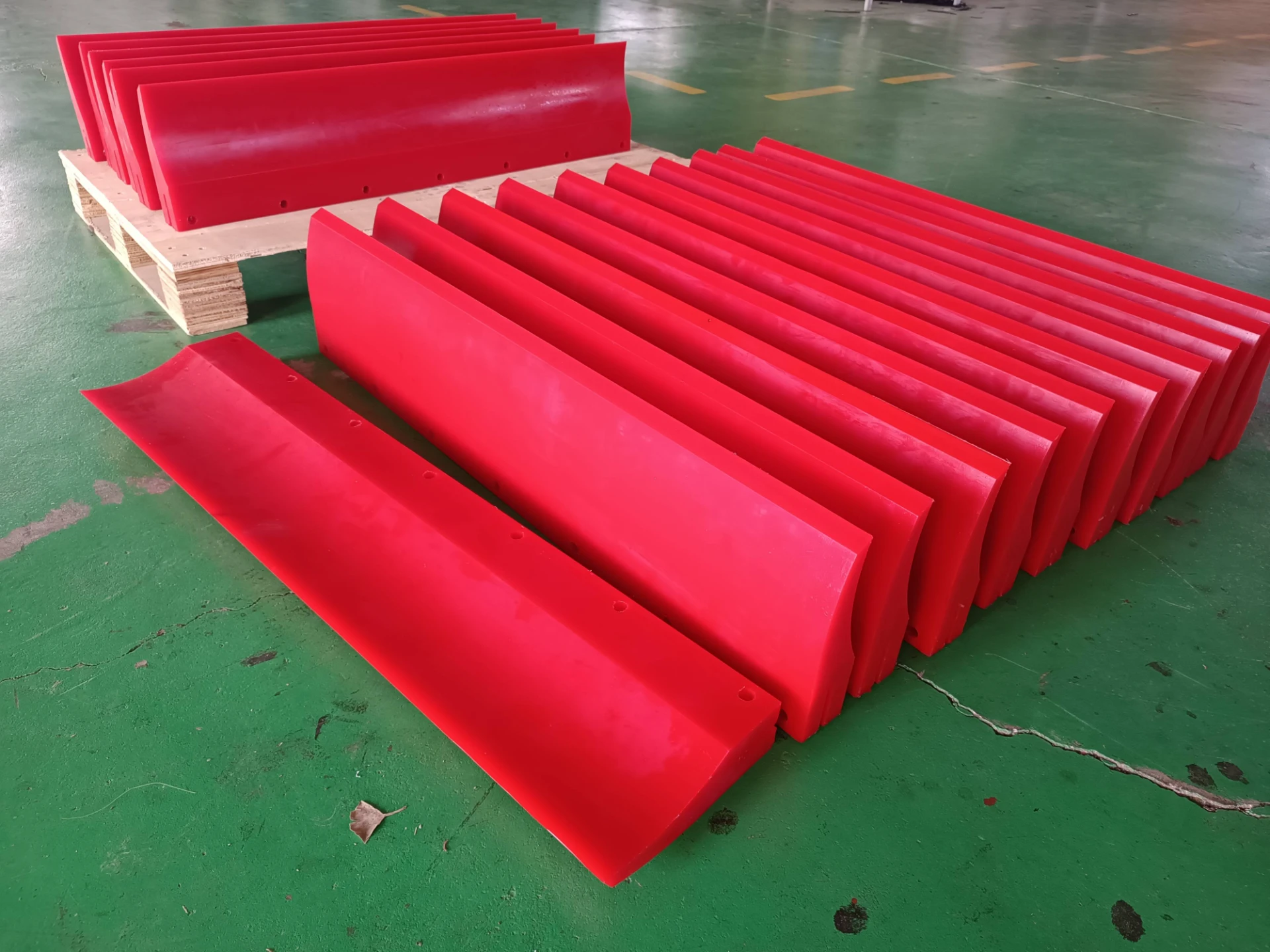
The unit is composed of three main assemblies: the scraper blade itself, a support bracket, and an adjusting mechanism. Understanding each component helps buyers evaluate whether a given model will integrate correctly with their existing conveyor line.
Key Selection Criteria
1. Wear Resistance and Material Integrity
The scraper blade is the component in constant contact with a moving belt, so material selection is the first and most important criterion. The blade on the Muto Wire Screen Co., Ltd. scraper is made from high-strength polyurethane, which the confirmed product description characterizes as having excellent wear resistance, oil resistance, and elasticity. A blade that wears unevenly or degrades quickly in oily or chemically active environments will require frequent replacement, increasing total operating cost.
Buyers should confirm:
- Whether the blade material is compatible with the specific substances carried on their belt (oils, chemicals, abrasive ore).
- Whether the hardness and elasticity of the polyurethane grade are appropriate for their belt speed and load.
2. Belt Compatibility and Surface Protection
A scraper that is too rigid can damage the belt carcass, particularly on high-value steel cord belts. The confirmed product description states that Muto Wire Screen Co., Ltd.'s polyurethane scraper offers higher strength without damaging the belt, especially steel cord belts, combined with flexibility and stiffness to adapt to belt profile. This balance between firmness and compliance is central to compatibility assessment.
Buyers should confirm:
- The belt type (fabric ply, steel cord, solid woven) and its surface characteristics.
- Whether the scraper blade profile can follow the belt's crowned or flat cross-section without creating edge-loading.
3. Adjustability and Maintenance Access
Over time, blade wear and belt tension changes require the scraper to be repositioned. The adjusting mechanism on this scraper allows operators to easily adjust the distance and pressure between the scraper and the material surface to adapt to different working environments and material characteristics. Pre-slotted mounting holes are also noted in the confirmed documentation as a feature that reduces downtime and potential injury during adjustment.
Buyers should confirm:
- Whether the adjustment range covers the full service life of the blade.
- Whether the mounting configuration matches the head-pulley geometry and frame dimensions of their conveyor.
4. Industry-Specific Safety and Compliance Properties
Certain operating environments impose additional material requirements beyond basic wear performance. The confirmed product documentation lists the following optional or available properties:
- Food-grade compliance: The polyurethane material can reach food-grade requirements, making it suitable for food-processing conveyor belts where contamination control is critical.
- Fire-retardant and anti-static properties: Noted as available, these are particularly relevant for underground mining operations where combustible dust or flammable atmospheres may be present.
- Low friction coefficient and corrosion resistance: These contribute to reduced drive-load impact and suitability in chemically aggressive settings such as chemical plants or port environments handling corrosive cargo.
Buyers working in mining, food processing, or chemical handling should specify these properties explicitly during procurement and verify the applicable grade with Muto Wire Screen Co., Ltd. directly.
Application Fit by Industry
The confirmed product documentation identifies the following primary application contexts for this scraper:
| Industry | Typical Cleaning Requirement |
|---|---|
| Mining | Remove ore particles and dust from the conveyor belt surface |
| Ports and terminals | Remove debris and dirt accumulated from cabin and dock operations |
| Chemical industry | Remove residue and adhesion from belt surfaces in process lines |
| Quarries | General carry-back and dust suppression at the discharge point |
| Food processing | Clean belt surface where food-grade compliance is required |
Each environment places different demands on blade chemistry, friction behavior, and optional safety properties. Match the row that corresponds to your site conditions before specifying a blade grade.
Integration Fit: What to Check Before Ordering
Beyond the blade material, successful integration depends on the mechanical fit between the scraper assembly and the existing conveyor structure. Buyers should verify the following points with the supplier:
- Mounting position: Primary scrapers are typically positioned at the head pulley, in contact with the belt on the carry side just before the discharge point. Confirm that the support bracket dimensions suit the available frame clearance.
- Tensioning system: The adjusting mechanism must be accessible and operable within the maintenance schedule of the facility. Pre-slotted mounting holes, as noted in the confirmed product description, can shorten installation and re-tensioning time.
- Belt width and speed: These parameters affect scraper length and the appropriate contact pressure. Confirm that the model range covers your belt width.
- Existing cleaner position: If a primary conveyor belt scraper is already installed, assess whether a secondary scraper at a different position is needed, or whether a direct replacement is the correct approach.
Summary of Selection Decision
The Muto Wire Screen Co., Ltd. Polyurethane Conveyor Belt Scraper suits buyers who need a cleaning solution that combines material durability with belt surface protection across heavy industrial and specialty applications. It suits use in mines, quarries, ports, chemical plants, and food-processing lines, with optional fire-retardant and anti-static properties for mining environments.
Key decision points are: blade material compatibility with your carried product, belt type (particularly steel cord vs. fabric), the need for food-grade or fire-retardant properties, and mechanical fit at the head pulley. Where operating environment requirements are clear and the adjustable mounting system matches the conveyor frame, this scraper is a directly applicable option. Contact Muto Wire Screen Co., Ltd. to confirm the applicable polyurethane grade, blade length, and mounting dimensions for your specific conveyor line.
THE PEOPLE

About the author
THE COMPANY
Muto Wire Screen Co., Ltd.
Visit company website ↗YOUR NEXT STEP
Bring your brief. Start a useful conversation.
Use case, specification, quantity and delivery window: make the next conversation specific.